This is the blog. Click here to go to the Zenopus Archives website.

Note: Many older posts on this blog are missing images, but can be viewed at the corresponding page in the Internet Archive

FEATURED POST

The Forgotten Smugglers' Cave: Index of Posts

An index of posts describing the Forgotten Smugglers' Cave, an adventure for Holmes Basic characters levels 2-4.                    ...

Showing posts with label New Monsters. Show all posts

Thursday, February 29, 2024

Leap Day: Giant Zenopus (New Monster)


Xenopus laevis from Amphibia and Reptiles by Hans Gadow (1901).
Source: Wikimedia Commons 


Giant Zenopus

Move: 30 feet/turn land; 180 feet/turn swimming
Hit Dice: 4
Armor Class: 5
Treasure Type: incidental
Alignment: neutral
Attacks: 1 rake with hindclaws
Damage: 2d4

The giant zenopus, an entirely aquatic frog, can grow to enormous proportions given a sufficiently nutritious diet, with specimens up to ten feet long having been reported. A ravenous scavenger, it will eat anything, locating and shoveling food into its tongueless mouth with strangely sensitive and prehensile hands. A strong swimmer, the zenopus is known to float motionless with its unblinking eyes just above the water, waiting for the opportunity to leap and grab its prey, raking with the large claws on its hindfeet as it pulls them under.

For defense, the skin of the zenopus exudes a slime that makes them extremely slippery (AC 5). Even worse, the slime of 1 in 10 frogs carries a parasitic aquatic chytrid fungus, and anyone scratched by the claws of such a frog must Save vs Poison or have their skin become infected. After 1 week, infection will cause loss of 1d4 hp per day due to the sloughing of skin, unless a Cure Disease or an anti-fungal poultice (consult a herbalist) is administered.

The eggs of the giant zenopus are prized by wizards for use in magical research due to their size (6" diameter), fetching 1,000 GP in larger cities. The eggs must be kept wet at all times or will perish. There are rumors that there are secret alchemical methods of cloning the eggs, and even darker tales speak of ways of transforming the egg into a frog that walks upright like a man.

The only other treasure that might be found is incidental to their behavior; i.e., that which was possessed by their prey.

Notes:
---Based on the real world Xenopus, a frog long used in biological research, and which was presumably J. Eric Holmes' inspiration for the name of Zenopus. The name "Xenopus" means "strange foot" in Greek. The 94th anniversary of Holmes' birth was just a few weeks ago, on February 16th (Holmes Day).

---The concept of breeding frogmen from giant frogs goes back to Dave Arneson's Temple of the Frog adventure found in the Blackmoor OD&D supplement

"He has genetically modified the killer frogs to begin breeding frogmen..." --- the Temple of the Frog by Dave Arneson

And of course frogmen tie-in nicely to Holmes' Dagonites, who as described are more froggy than than fishy. 

"...surely your recent encounter with the frog-man should have convinced you of the reality of the Dagonites"  --- Murray the Mage, The Maze of Peril

---I originally drafted this in 2019 in comments to a post made to the late lamented Holmes Basic G+ group, just before G+ was shut down. While I transferred most of the posts from that group to an archive blog, this one didn't make it for unknown reasons. But I found it in an XML file I had downloaded and recovered the comments and revised them into this post.

Happy Leap Day!

See also:

Saturday, January 20, 2024

Dice Dragon: Breath Weapon further research


Based on further reports from adventurers collected by the Portown Sage, it is apparent that the Dice Dragon does not only breath faerie fire; rather, that is just one possible effect. The revised bestiary shall now read:


Dice dragons defend themselves with a sharp bite or, three times a day, a small puff of weird fire at a single target, which does no damage but causes a random effect (unless a save versus breath weapon is made) that lasts for 3d4 turns, as determined by rolling a d12:


  1. Aged Equipment. All of the target’s non-magical equipment ages such that the next use causes it to break.

  2. Berserk Grappler. The target immediately attempts to grapple the nearest creature other than the dragon, and continues to do so for the duration. 

  3. Cloud of Darkness. Emanates from the target in a 30 foot radius, and moves with them.

  4. Contagious De-evolution. The target, but not their equipment, polymorphs into a small lemur, and anyone who touches the lemur must save or suffer the same.

  5. Enforced Pacifism. Any attack made by the target is followed by a round of incapacitating pain and suffering of 1d4 points of damage.

  6. Faerie Fire. Outlines the target (+2 to be hit), and then in the next round spreads to all in a 30 foot radius.

  7. Intermittent Beacon. Target emits a flash of light that blinds all in a 30 foot radius for 1 turn unless a save is made. This repeats once per turn for the duration.

  8. Magic Absorption. The power of one spell or magic item, determined randomly, possessed by the target is transferred to the dragon to use. A spell or charged item so affected is lost, but a permanent item will be restored after the duration.

  9. Noxious Stench. Emits from the target and is so strong that all within 60 feet must save each round to take any action.

  10. Ravenous Hunger. For the duration, the target can do nothing but eat; after eating all their own rations, they will go after that of any others within sight.

  11. Screaming Fear. Target flees, screaming maniacally, until at least 1000 feet from the dragon, and then screams again for one entire round each turn thereafter.

  12. Visible Gaseous Form. Target assumes the form of a highly visible purple gas; all items drop to the ground.


Note: This is a revision of a new monster published previously on this blog. I decided that a monster with "Dice" in the title should produce a dice-based random effect. Also, the revised dragon employs all of the polyhedrals of the TSR Dragon Dice Set: d4 for breath weapon duration, d6 for bite damage; d8 for hit dice; d10 for percentile-based alignment; d12 for breath weapon effect; and d20 for attacks/saves.


Friday, October 20, 2023

Troodontoid Statue (New Monster)


Image Source

This is a new monster for Holmes Basic, one which is featured in Area 18 oThe Forgotten Smugglers' Cave adventure (which is indexed here).

Troodontoid Statue

Move: nil
Hit Dice: by magic-user level
Armor Class: 0
Treasure Type: nil
Alignment: neutral
Attacks: spell-casting
Damage: by spell

 
Aeons ago, with their civilization facing an apocalypse, certain powerful wizards of a race of intelligent theropods preserved themselves through powerful magics that transformed them into magical statues, which would endure until conditions were more amenable for their return. 

On discovery, a troodontoid statue appears as a humanoid figure, roughly carved but with an observably non-human pointed face with huge eyes. The type of stone cannot be determined and is impervious to ordinary weapons or tools, only suffering damage from magical weapons. Magic cast or focused upon the statue, including Detect Magic, will be absorbed (as if by a Rod of Absorption) without effect and causing the spell to end if already in effect. The first five spell levels that are so absorbed will serve to incrementally awaken the troodontoid shade that dwells within, and the statue will slowly become of noticeably finer quality; i.e., more life-like in appearance.

Once fully awake, the troodontoid shade within will attempt to communicate telepathically with a spell-caster, although the long-forgotten tongue will be unintelligible unless a Read Languages spell is employed. Through permanent magic, the statue itself will be able to understand the spell-caster. If communication is achieved, the awakened statue will try to bargain for more magic to be cast upon it, for example offering to teach new spells to a magic-user.

The statue will be equivalent to a 11th to 16th level magic-user (roll 1d6 + 10 to determine), and able to absorb a total number of spell levels equal to a caster of that level. For example, a statue equivalent to a 13th level magic-user can absorb up to 78 spell levels total, and will know and be able to cast any standard spell of levels 1-6 using the levels it has absorbed. If attacked, the statue can defend itself using such spells. It can only use absorbed spell energy for casting; it has no further ability to memorize spells. 

If a magic-user studies with the statue daily, it can teach a new spell in an amount of time equal to one week per spell level (add 25% to the magic-users chance to know, and spells previously failed can be tried again); in exchange, the magic-user must cast one spell level on the statue each day.


Detail of "Dinosauroid" by Ely Kish. Source.

The statue will eventually use the absorbed levels to cast strange spells that will allow it grow a new flesh body for the shade to inhabit. The DM can decide whether the reborn troodontoid remains a beneficent mentor or has another, more sinister purpose.

Thursday, August 31, 2023

Corpse Fog (New Monster)

This is a new monster for Holmes Basic, one which is featured iArea 25 oThe Forgotten Smugglers' Cave adventure (which is indexed here).


Corpse Fog

Move: 90 feet/turn
Hit Dice: 3
Armor Class: 5
Treasure Type: B
Alignment: neutral
Attacks: 1 touch
Damage: 0 plus energy drain

A body, when interred near the sea, may become possessed by a form of undead known as the corpse fog. If such a corpse or its burial possessions are disturbed, fog with a greenish cast will begin to issue from its mouth, coalescing in two rounds into a churning humanoid form that will advance on the nearest living creature in an attempt to drain it of its life energy (each hit will drain one life energy level).

Initially having three hit dice, a corpse fog will add one more for each level drained from a character, and this will also add to its hit points (roll randomly for each new hit die). 

The corpse fog is immune to normal weapons, and is turned as undead of equivalent hit dice (HD 3 = wight, HD 4 = wraith, etc). A successful result will send the fog back into its corpse. 

Destroying a corpse fog will result in a blast of mist that will do 2d6 damage to all within 50 feet (save for half), but will also restore any levels drained by the fog.


Friday, July 21, 2023

Vampire Bat & Were-Vampire Bat (New Monster)

These are two new monsters for Holmes Basic, the first of which is featured in Area 6 of The Forgotten Smugglers' Cave adventure (which is indexed here), and originally appeared as part of my list of One Hit Point Monsters.


Illustration by Lore Suto


Vampire Bat

Move: 180 feet/turn flying
Hit Dice: 1/8 (1 hit point)
Armor Class: 3 (9 while attached)
Treasure Type: nil
Alignment: neutral
Attacks: 1 bite
Damage: 1 point

A native of subtropical climes, the vampire bat has of late begun appearing in certain temperate coastal towns, apparently escaping from traders importing them for clients unknown. Roosting in colonies of up to 50 individuals, often in the warmer caves of the near underworld, they venture out in smaller groups (2d6 bats) to feed on livestock, other mammals, or even humans. 

When suitable prey is located, the bats will silently swoop down and attack from behind (surprise on 1-5 in 6, attack at +4). A hit inflicts a point of damage and allows a bat to attach and, unless stopped, automatically drain another point for each of the next two rounds (thus, three points total), before detaching and flying away. Attacks on an attached bat are against armor class 9, but a miss with a weapon will automatically hit the victim for a point of damage. Unattached bats will continue attacking in an attempt to distract the prey from disturbing attached bats.

For each round of attachment, there is a 1% chance that a bat will transmit a rare form of lycanthropy, causing the victim to become a were-vampire bat (see below) in 2d12 days.

Established colonies produce a layer of pinkish guano across the floor of their cavern, which which produces an acrid smell that can be detected from a distance, and is prized as a fertilizer (20 gp per bucket). Due to the strength of the odor and slippery consistency, any melee in such areas is conducted at a -4 to hit, with a natural 1 indicating a slip and fall.

The bats sleep soundly in the lair during the day, but any activity in the lair has a 1 in 6 chance per character (e.g., 2 in 6 chance for 2 characters) of waking the bats. Once disturbed, all of the bats of the colony will join in on a frenzied attack on the intruders.

It is rumored that larger forms of the vampire bat exist in the tropics.

Were-Vampire Bat

Move: 120 feet/turn flying (giant bat form) or 60 feet/turn flying or 120 feet/turn walking (man-bat form)
Hit Dice: 2 + 2
Armor Class: 3 (giant bat form) or 5 (man-bat)
Treasure Type: C
Alignment: neutral/lawful evil
Attacks: 1 bite (giant bat form) or 1 bite and 2 claws (man-bat form)
Damage: 1d3 (giant bat form) or 1d6/1d3/1d3 (man-bat form)

The unfortunate victims of the vampire bat may, on occasion, be inflicted with a rare form of lycanthropy, eventually transforming into a were-vampire bat. Like the were-rat, the were-vampire bat may take three different forms: human, giant bat, or horrible hybrid man-bat. As with other lycanthropes, it is immune to normal weapons in the latter two forms. In man-bat form, it is less agile but stronger of limb, and able to attack with claws in addition to biting.

If possible, the were-bat will roost and hunt together with a colony of ordinary vampire bats, favoring old buildings that allow egress in either bat or human form. It can summon these bats to its aid at will, and will hunt together with a group of them in giant bat form.


Saturday, July 1, 2023

Agate-Eyed Skeleton (New Monster)

This is a new monster for Holmes Basic, one which is featured in Areas 20 and 24 of The Forgotten Smugglers' Cave adventure (which is indexed here).


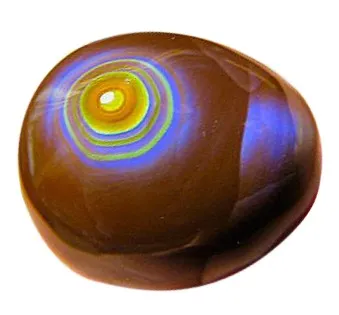
Eye Agate. Image Source.


Agate-Eyed Skeleton

Move: 120 feet/turn
Hit Dice: 2
Armor Class: 7
Treasure Type: agate eyes (100 gp each)
Alignment: neutral
Attacks: 1 bony hands
Damage: 1d6

Agates are purported to promote restful sleep, and certain funerary practices incorporate this belief by burying the dead with such gemstones. Some secretive groups go even further, replacing the eyes of the deceased with eye agates, and if these are of sufficient value (100 gp per eye), the strange energies of the underworld may transform the thusly treated remains into an agate-eyed skeleton, an unusual variant of animated skeleton. 

The practices that produce such skeletons means that they are typically found in groups in burial chambers. If undisturbed, the skeletons will remain at rest, but anyone gazing upon their agate eyes must save versus magic or fall asleep for 1d6 turns. Unlike a Sleep spell, characters so affected cannot be awakened prior to this by any means short of a Dispel Magic.

Damaging Skeletons. Any attack that inflicts damage on a skeleton, and does not destroy it, will cause it to immediately animate and attack with its bony claws. Once arisen, characters viewing the eyes no longer need to save versus magic. Furthermore, even if the skeleton is destroyed, 1d6 other skeletons in the same area will animate each round until all in the area have joined in. The assault will continue until the intruders have been destroyed or have fled the area, although a successful turning (as a ghoul) by a cleric will send the skeletons back to their resting places and prevent any further ones from animating.

Moving Skeletons. Any attempt to move a skeleton will, after a one round delay, result in the same effect as damaging the skeleton. However, if during this round the bones are placed in a specially consecrated ossuary, which may or may not be located nearby (DM's discretion), the skeleton will not animate and both agates can be safely removed.

Removing Agates. If a character attempts to remove an agate without disturbing the skeleton, there is a small chance of success. The base chance is equal to the attempting character's dexterity (e.g., a 10% chance for a dexterity of 10). Thieves add their chance of removing traps to this (e.g. a thief with a 15 dexterity and a 15% chance of remove traps would have a 30% chance). If this roll is failed, the eye is removed but the skeleton then animates as if damaged and will incessantly attempt to retrieve its eye, to the point of relentlessly stalking the offending character. Removing a second eye agate from the same skeleton will automatically cause it to animate.

It is rumored that placing such gems in the eyes of skeletons before casting Animate Dead will also produce an agate-eyed skeleton.

Sunday, June 18, 2023

Grotto Iguana (New Monster)

This is a new monster for Holmes Basic, one which is featured in Area 18 of The Forgotten Smugglers' Cave adventure (which is indexed here).


Image Source


Grotto Iguana

Move: 90 feet/turn
Hit Dice: 3 + 1
Armor Class: 2
Treasure Type: nil
Alignment: neutral
Attacks: 1 bite + 1 tail whip
Damage: 2d6/bite, 1d6/tail whip

In certain wet and warm caverns of the underworld, strange vegetation thrives under the glow of phosphorescent fungus, and in such places dwells the grotto iguana. Herbivores like their smaller surface-dwelling cousins, these giant lizards can purportedly live for over a century, slowly growing to the size of a horse.

Forming loose-knit colonies, the smaller iguanas will, if threatened, flee and hide among the crevices of the grotto, while the larger individuals will defend themselves with a strong bite and a whip of their long tails, which can be used against a second opponent if necessary. They also scrape their tail on the ground, making a noise that will summon others to their aid.

If approached cautiously, and provided with generous amounts of fruits and vegetables, the largest individuals can be induced to serve as underworld pack animals (treat as a draft horse with a carrying capacity of 5,000 gold pieces).

Sunday, May 28, 2023

Well Worm (New Monster)


"Front View of a Nematode Monster..." 
Source: Cobb (1914)


This is a new monster for Holmes Basic, one which is featured in Area 19 of The Forgotten Smugglers' Cave adventure (which is indexed here). It originally appeared as part of my list of One Hit Point Monsters.

Well Worm

Move: 60 feet/turn swimming
Hit Dice: 1/8 (1 hit point)
Armor Class: 7
Treasure Type: nil
Alignment: neutral
Attacks: 1 bite
Damage: 1 point

Well worms, the bane of farmers, are a form of giant roundworm that can infest any type of still water. With a soft yet exceedingly slimy body up to two feet in length, ending in a nasty tripartite jaw ringed with grasping feelers, and the ability to launch themselves up to three feet out of the water, removing even one from a body of water is a daunting task, and they are frequently found in significant numbers (2d20 worms). Being generalists in diet, they can thrive in a number of harsh habitats, even underground, and can slowly creep across land to find new waters. Having evolved to live in the foulest of water, they are immune to poison.

It is rumored that the slime of the well worm is desired by wizards for use as an ingredient in certain magical oils that render one immune to capture by grasping and entangling attacks.


Monday, April 3, 2023

Corpse Light (New Monster)

This is a new monster for Holmes Basic, one which is featured in the Random Encounters table of The Forgotten Smugglers' Cave adventure (which is indexed here). It originally appeared as part of my list of One Hit Point Monsters.

Corpse Light

Move: 120 feet/turn floating
Hit Dice: 1/8 (1 hit point)
Armor Class: 7
Treasure Type: nil
Alignment: neutral
Attacks: 1 hit
Damage: 1 point

These minor undead form from the spirits of torchbearers who have perished in the underworld or wilderness, and are said to be particularly motivated to enact vengeance on cruel or indifferent employers. Each one appears as a burning torch held aloft as if by an invisible hand. 

Seemingly drawn together, corpse lights are typically encountered in groups (3d4 would not be unusual). At a distance they appear as an approaching group of torch lights, but on drawing closer their chilling absence of bearers becomes apparent. The floating torches will begin circling, and muttered accusatory phrases may be heard, as they judge a party of travelers. They will never attack henchmen or other servants, and may depart without incident if a group contains well-treated members of this class.

If a group is found to be lacking, the corpse lights will begin swooping in and taking strikes at various members. Once they begin attacking, they can only be stopped through direct strikes of the torches or by clerical turning (as skeletons with a +2 on the roll).

Friday, March 17, 2023

Rock Crab (New Monster)


Rock Crab by Lore Suto

The Rock Crab, a new monster, originally appeared only in the Random Encounter table of the Forgotten Smugglers' Cave adventure (indexed here). However, inspired by Lore Suto's fantastic illustration for them, I recently realized that if they also climb walls they fill a dungeon niche similar to piercers (which aren't in the Holmes Basic Monster List, so would essentially be a new monster themselves for a Holmes adventure), so I have revised the adventure to replace the piercers in Area 9 and the Random Encounter table with rock crabs.


Rock Crab


Least Large Huge Giant
Move 120 feet/turn,
90 feet/turn
swimming
90 feet/turn,
60 feet/turn
swimming
60 feet/turn,
30 feet/turn
swimming
30 feet/turn,
15 feet/turn
swimming
Hit Dice 1 hp 1/2 1 2
Armor Class 7 5 3 1
Treasure Type nil nil nil nil
Attacks/
Damage
2 claws for
1 hp each
2 claws for
1d4 each
2 claws for
1d6 each, or
1 drop for 1d8
2 claws for
1d8 each, or
1 drop for 1d12


These cavern-dwelling crabs have shells resembling cave formations, and thus can camouflage themselves in their environs by tucking their legs and claws underneath and remaining motionless. In this manner they attempt to surprise their prey as it passes (1-3 in 6). 

Furthermore, as they grow, the spikes on the back of their shells grow taller, coming to resemble groups of short stalagmites or stalactites. The huge and giant crabs have claws strong enough to grip rock, and will often climb to the ceiling and attempt to drop on their prey (surprise on 1-5 in 6; if the crab gains surprise, the drop is treated as an attack roll with a +4 to hit and doing the indicated damage; if a character is not surprised, they can automatically avoid the dropping crab). 

The least rock crabs will generally be found in hatcheries in large numbers (4d6). As they grow, they wander to other caverns but often stay in loosely associated groups (2d4 large, 1d6 huge, or 1d3 giant rock crabs). After one crab makes an initial attack, it will drum its claws on the floor for one melee round to alert the others in the area to join in. During this round it will attempt to dodge attacks but will not make an attack.
 
While the rock crab lives on land, they can still swim slowly and will sometimes dwell on the ceilings of water-filled caverns inhabited by fish upon which they can prey.

Their shells are extremely tough and can be fashioned into shields that are equal to metal in strength.

Friday, March 10, 2023

Were-shark ("New" Monster)

An unholy symbol depicting a were-shark; illustration by Lore Suto


A "new" monster for Holmes Basic, which is featured in Area #10 of The Forgotten Smugglers' Cave adventure.

The were-shark is one of the few monsters that was introduced into D&D by J. Eric Holmes, and certainly his most iconic monster contribution. He mentioned them in the entry for Lycanthropes in the Holmes Basic rulebook, and they featured prominently in his novel The Maze of Peril, in scenes based on actual game sessions from his early years running D&D for his sons. 

Holmes never provided us with a formal write-up of this beast, so here finally is a version for use with Holmes Basic & OD&D. Note that I've used the hyphenated spelling ("were-shark") in line with the way it appears in the Holmes Basic rulebook and The Maze of Peril.

Were-shark

Move: 60 feet/turn walking, 150 feet/turn swimming
Hit Dice: 4
Armor Class: 5
Treasure Type: C
Alignment: neutral/chaotic evil
Attacks: 1 bite and 1 tail slap
Damage: 2d6/1d6

An old coastal legend tells of a primordial sea deity who, angered by the increasing intrusion of land-dwellers into its domain, sent forth a lycanthropic curse to punish these interlopers. It begins with a grievous shark bite that, if survived, leads to something even more horrible. At night, the victim will find themselves yearning to swim, an urge that will grow until the light of the full moon striking the sea draws them inexorably into the water to complete the cycle by transforming into an enormous shark, hunting for food and further victims. Perhaps most disturbingly, they can also assume an unnatural hybrid form having the body of a shark joined with muscular human arms and legs, rendering neither watercraft nor beach a safe haven from their depredations. The sight of this hybrid emerging from the water may paralyze even the stoutest of souls (make a saving throw against turn to stone or be unable to take any action; may try again each round).
 
While a strong-willed were-shark may regain some measure of control while the moon is waning, as time goes on they typically spend more and more nights in the sea, and trend chaotic and evil as their affinity for their deital creator strengthens. Their presence in the water will attract other sharks to the vicinity, and the smaller ones can be summoned when in need.

Sharks (1d6): MV 240 feet/turn swimming, HD 1d3, AC 6, AT 1 bite for 1d6.

Eventually a were-shark will abandon civilization for a lair on a deserted island or hidden sea cave, occasionally shared with others of their kin, where they will sleep in human form during the day among a hoard of items plundered from anglers and sailors. Some become guardians for other followers of the deity, although their tendency to attack allies as well as foes renders them somewhat unreliable. 

In shark or hybrid form, their primary means of melee attack is a ferocious bite, but in hybrid form they can also slap a second opponent with their tail, which in addition to inflicting damage may stun the target (drop anything held on 1-2 in 6). As with other lycanthropes, a were-shark in animal or hybrid form is immune to normal weapons, but is subject to silver or magic. Sages caution that land-based plants such as wolvesbane may be ineffective against a were-shark. Whether there exists a seaweed or coral that can be substituted remains to be determined.


Chris' original illustration of the Wereshark from A&E #13, July 1976

See Also:
---All of the posts tagged WERESHARK in the Holmes Basic G+ Community Archive

Chris Holmes' inscription in a copy of Tales of Peril:


Friday, February 10, 2023

The Forgotten Smugglers' Cave #25: Crypt of the Arch Smugglers

This is an installment of a new adventure for Holmes Basic D&D. You can find the Introduction to the dungeon here: Area 1.

Each entry includes part of a "pointcrawl" map showing the area & any exits, which include links allowing you to navigate the dungeon:


 25. CRYPT OF THE ARCH SMUGGLERS

S
H
H
H
 
Area 24


(H = ladder up)

25. CRYPT OF THE ARCH SMUGGLERS. This was the final resting place for the leaders of the smugglers. Major features include an entry ladder, a tunnel, a door, and a crypt chamber holding a sarcophagi.

Entrance. The only way in to Area 25 is via the ladder down from the hidden space in the central block in Area 24. The ladder consists of metal rungs anchored in stone. The vertical shaft is 3 feet wide, with the ladder on the west wall, and goes down 30 feet until it reaches the south end of a 10 foot wide tunnel. This tunnel extends north for 40 feet, with walls covered with the skulls of orcas and other toothed whale, each mounted in lime plaster. 

Whale Skull Door. At the north end of the tunnel is a stone door, on which is mounted the largest of the skulls, which is that of an enormous toothed whale. The walls adjacent to each side of the door are lined with orca skulls. 

The door is locked and heavy. Opening the lower jaw of the whale skull will reveal a stone trigger plate set in the middle of the door. However, pushing this trigger without first unlocking the door with the appropriate key (found in the desk in Area 25), will cause the jaws to snap shut, delivering 1d6 damage to anyone reaching in. 

The keyhole to unlock the door is within the mouth of the centermost orca skull to the right of the door. Keeping it unlocked requires holding it place once it is turned counterclockwise. 

Finally, pushing the door open will require a combined strength of 30. 

Thus, opening the door safely will require three or more individuals: one to hold the key in a turned position in the keyhole, one to push the trigger plate, and one or more others to add their strength in pushing the door open.

Crypt Chamber. Beyond the door is a room 30 feet wide and 60 feet long, with no other visible exits. Decorated bronze sarcophagi, each set upon a plinth, stand upright, anchored to the walls. There are 6 along the west wall, 3 along the north wall and 4 along the east wall. These run in order from oldest to the most recent arch smuggler, with the oldest being the southernmost one on the west wall, and the newest being the southernmost one on the east wall. This one contains the corpse of the most recently interred chief, Mot Daxor, who usurped Ness Sentra (see Area 13).

Sarcophagi. The front of each sarcophagus is tightly fitted to the body, but can be pried off with an iron spikes or crowbar.

Inside each stands a withered corpse, bound in place, and wearing decaying fine leather armor and a belt with a cutlass in a decorated scabbard. Nothing will happen unless the contents (corpse or cutlass) of a sarcophagus are disturbed, in which case a green smoke will begin issuing from the mouth of the corpse, coalescing in 2 rounds into a churning humanoid form that will advance on the nearest living creature in an attempt to drain its life force.

Corpse Fog (13): DX 9, AC 5, HD 3*, hp 8, AT 1 touch for 0 damage but energy drain (one level), SD immune to normal weapons, draining adds one HD; turning dependent on HD (3 HD = wight, 4 HD = wraith, etc). Successful turning will send the fog back into its corpse.

Each fog starts with two HD, but adds a HD for each level drained from a party member. Roll for the additional hit points gained. Destroying one will result in a blast of smoke that will do 1d6 damage to all in the chamber but will also restore any levels drained by that fog.

The corpses are otherwise safe to touch. Each scabbard and cutlass is worth at least 500 gp, and each cutlass has a 1 in 2 chance of being a magic weapon (roll again, 1-3 = +1, 4-5 = +2, 6 = +3).

If the Shade of Mot Daxor is defeated, and his remains replaced with those of Ness Sentra, the players will lift the curse and gain her treasure (Area 13). Sentra's ghost (a reinvigorating spirit) will appear here briefly and thank the players, restore up to four drained levels, and then fade away.

Chronologically on this blog, the previous installment described Area 24

HERE ENDS THE FORGOTTEN SMUGGLERS' CAVE